In today's rapidly evolving tech landscape, Innovative Smart Lighting Trends are shaping the way we illuminate our spaces. Smart lighting goes beyond simple functionality; it enhances energy efficiency and user experience. Many homeowners are now exploring options that adapt to their lifestyles. These innovations promise convenience and savings.
Technological advancements like IoT integration bring lights to life, allowing for unprecedented control. Imagine adjusting your home’s brightness and color temperature with just your voice or smartphone. However, with this convenience comes a need for awareness. Are we relying too heavily on technology?
Some innovations also raise questions about privacy and data security. As we embrace these trends, it’s essential to consider their broader implications. Embracing Innovative Smart Lighting Trends can lead to better living environments. Yet, we must navigate these changes thoughtfully and responsibly.
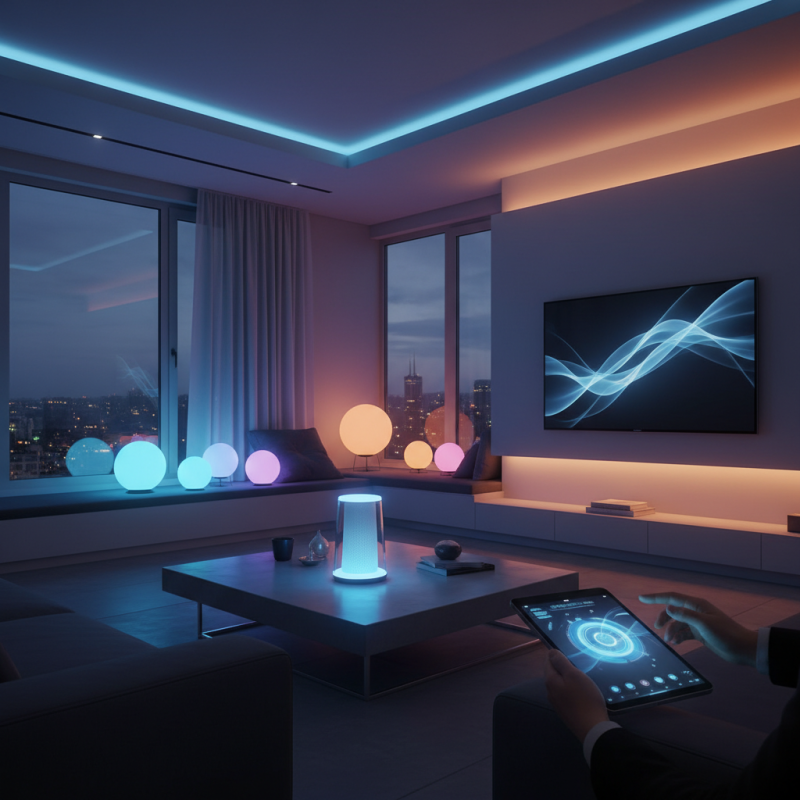
Smart lighting systems are rapidly evolving with emerging technologies that redefine traditional lighting concepts. Recent reports estimate that the global smart lighting market will reach $60 billion by 2026, driven by innovative solutions. These systems now integrate IoT connectivity, allowing users to control lighting remotely via apps. Such convenience enhances energy efficiency, but it raises concerns about data privacy.
Advanced sensors and AI algorithms play a crucial role in smart lighting. They adapt to the environment, adjusting brightness based on natural light. This technology can save up to 30% on energy bills, a significant reduction for households and businesses alike. However, reliance on such systems introduces vulnerabilities. Hackers may exploit weaknesses in network security, leading to potential breaches.
Moreover, human-centric lighting is gaining traction. This approach aligns lighting with the circadian rhythm, promoting better health and productivity. Studies indicate that well-designed lighting can improve mood and focus by up to 20%. Yet, implementation can be costly and complex. Balancing the benefits with challenges remains vital as we embrace these transformative technologies.
The shift towards sustainable and energy-efficient smart lighting solutions is not just a trend; it's a necessity. These innovative systems can significantly reduce energy consumption, leading to lower utility bills and a smaller carbon footprint. Incorporating LED technology is one of the simplest ways to achieve this. These bulbs consume up to 80% less energy than traditional options. It's crucial to consider smart controls, like motion sensors and timers, which ensure lights only operate when needed.
Tips for optimizing your smart lighting include assessing your space’s natural light. This can help you determine where to install smart lights effectively. Choose fixtures that complement your environment while enhancing energy efficiency. Remember, efficient lighting doesn't mean you must sacrifice style.
Moreover, think about installation. While some setups seem easy, others can be complicated. Engage with professionals if needed. A poorly installed system may not function correctly, negating any energy savings. Don’t be afraid to seek help; it's better to get it right the first time. Embrace these sustainable solutions, but keep a critical eye on your choices. Reflect on your needs to ensure efficiency without compromising on quality.
The Internet of Things (IoT) is transforming smart lighting systems. This technology connects devices and allows them to communicate. According to a recent report by Markets and Markets, the smart lighting market will reach $29.57 billion by 2025, driven by IoT advancements. Such figures reflect a genuine shift in how lighting interacts with consumers and the environment.
IoT enables remote control and automation of lighting systems. Sensors can adjust brightness based on occupancy, improving energy efficiency. A study from the American Council for an Energy-Efficient Economy showed that smart lighting can reduce energy consumption by up to 60%. However, implementing IoT in smart lighting is not without challenges. Security concerns remain prevalent. Hackers can exploit vulnerabilities in connected systems, emphasizing the need for robust cybersecurity measures.
Moreover, integrating IoT into existing infrastructure can be complex and costly. Lighting designers often face difficulties in retrofitting old systems with advanced technology. The potential disconnect between user expectations and the actual capabilities of smart lighting adds to this complexity. Innovations must focus on bridging these gaps while maintaining user-friendly experiences.
User-centric design in lighting is transforming the way we experience spaces. Customization allows users to adjust brightness, color temperature, and mode depending on their needs. For instance, a warm ambiance can promote relaxation, while cooler tones can enhance focus. This flexibility is crucial in today's fast-paced environment.
Innovative smart lighting solutions empower individuals to craft their perfect atmosphere. Voice control and mobile apps make it easier than ever to manage settings. However, not all users are tech-savvy. Some may struggle with complex controls. It’s essential to design interfaces that are intuitive and approachable.
Moreover, the importance of personal connection with lighting cannot be overstated. Users often seek emotional resonance from their environments. Lighting that adapts to personal preferences fosters well-being. It might seem perfect, yet there is always room for improvement. Creating feedback loops can help manufacturers understand user experiences better. This dialogue could refine products and deepen user satisfaction.
| Trend | Description | Benefits | Customization Options |
|---|---|---|---|
| Human-Centric Lighting | Lighting designed to enhance well-being, productivity and mood. | Improves mental health, boosts energy levels, enhances focus. | Adjustable color temperature and brightness controls. |
| Smart Controls | Integration with smart home systems for remote operation. | Convenience and flexibility in managing lighting. | Voice control and smartphone app functionalities. |
| Personalized Lighting Scenes | Customizable lighting setups for various activities or moods. | Enhances the ambiance based on user preferences. | Pre-defined and user-customized scene settings. |
| Energy-Efficient Solutions | Adoption of LED and other low-power lighting technologies. | Lower energy bills and reduced environmental impact. | Settings to optimize energy consumption based on user habits. |
| Adaptive Lighting | Lighting that changes based on environmental conditions or time of day. | Improves safety and comfort by adjusting to needs. | Automatic adjustments for brightness and color based on ambient light. |
Smart lighting is transforming urban infrastructure and enhancing public safety. Cities equipped with modern lighting systems often see a reduction in crime rates. These smart systems adjust brightness based on real-time data, improving visibility and deterring potential offenders. For example, sensors can detect movement, making streets safer at night.
However, the implementation of smart lighting is not without challenges. The cost can be a barrier for many municipalities. Installation and maintenance require skilled professionals. Additionally, there are concerns about data privacy related to the information gathered by these systems. Transparency in data usage is crucial to alleviate public fears.
Moreover, as cities adopt these technologies, they must consider inclusivity. Not all neighborhoods benefit equally from advanced lighting. Disparities can arise, leaving certain areas darker and less safe. Addressing these issues is essential for creating a balanced urban environment. Municipalities need strategies to ensure equitable access to smart lighting for all residents.
: Smart lighting systems use technology to enhance control over lighting, enabling remote adjustments via apps.
Smart lighting can reduce energy consumption by up to 30% through features like advanced sensors and AI adjustments.
Human-centric lighting aligns with our natural rhythms, improving mood and focus by as much as 20%.
Installation can be complex and may require professional assistance to ensure everything functions correctly.
Smart lighting can reduce crime rates by improving visibility through real-time adjustments based on data.
Yes, the collection of data raises privacy issues, necessitating transparency about how information is used.
Assess natural light, choose compatible fixtures, and ensure installations maximize both efficiency and aesthetics.
Evaluating your specific needs allows you to achieve efficiency without compromising on quality or style.
Poor installations can negate energy savings, highlighting the need for professional help if required.
High costs can deter implementation, highlighting the need for careful budget consideration and planning.
The article "Innovative Smart Lighting Trends You Must Know Now" explores the latest advancements in smart lighting systems, highlighting emerging technologies that enhance energy efficiency and sustainability. The integration of the Internet of Things (IoT) plays a pivotal role in modern lighting applications, allowing for seamless control and automation. This evolution in lighting not only improves energy consumption but also enhances safety and functionality within urban infrastructure.
Additionally, the focus on user-centric design and customization illustrates a shift towards personalized lighting experiences. By catering to individual preferences and environmental needs, innovative smart lighting trends are reshaping our surroundings, making them more adaptive and responsive. As cities continue to embrace these trends, the impact on infrastructure and community safety becomes increasingly significant, paving the way for smarter, more resilient urban environments.

Splink Lighting