Why Choose Energy Efficient Lamps For Bedrooms? The answer begins with comfort, cost, and control. Bedrooms need gentle illumination, not harsh glare or unnecessary brightness. ENERGY STAR reports that certified LED bulbs use up to 90% less energy than traditional incandescent bulbs and can last up to 25 times longer. That difference matters beside a bed, where lights may operate every evening for years.
The International Energy Agency’s Lighting 2022 analysis also identifies LEDs as a major efficiency opportunity worldwide. Efficient lighting can reduce electricity demand, replacement waste, and household operating costs. Still, efficiency alone does not guarantee a restful bedroom. Color temperature, dimming performance, flicker, and shielded design deserve equal attention. A cool, exposed bulb may save energy but feel unpleasant at night.
Lighting expert and author Dr. Mariana Figueiro has emphasized the biological importance of evening light: “Light at night can affect our circadian rhythms.” Her research at the Mount Sinai Light and Health Research Center connects nighttime lighting with sleep-related concerns. This makes lamp selection more personal than a simple wattage comparison.
Choose carefully. Warm-white LEDs around 2700K often create a calmer atmosphere, while adjustable brightness supports reading without flooding the room. Yet product labels can be confusing, and advertised lifespans depend on real usage conditions. That limitation deserves honesty.
Energy Efficient Lamps For Bedrooms can support lower bills and a softer nighttime environment. The best choice balances verified efficiency with visual comfort, responsible materials, and practical controls. A small lamp still shapes the room’s entire mood.
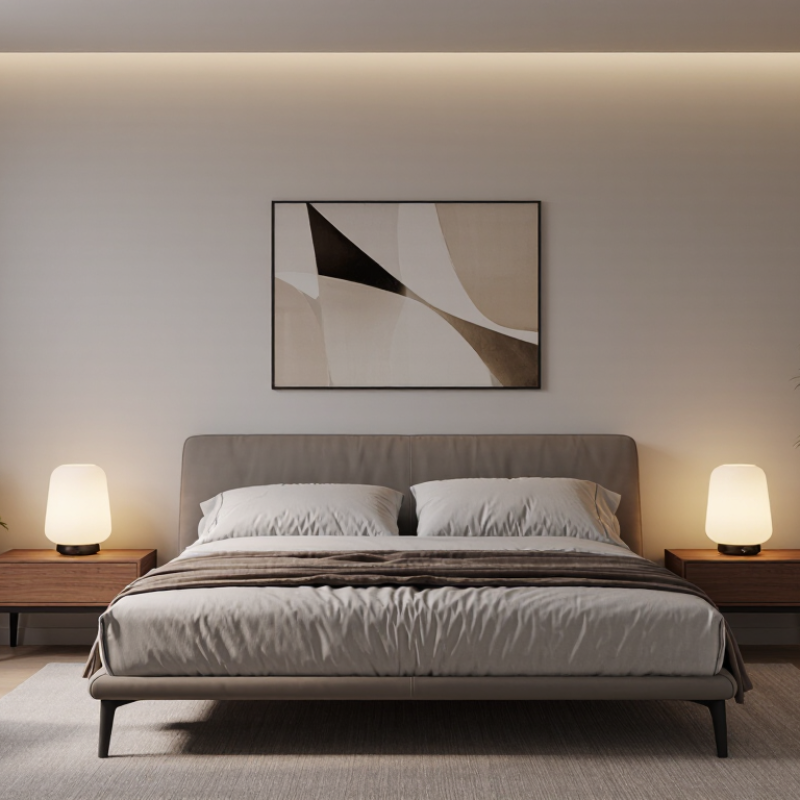
Energy-efficient bedroom lamps provide useful light while drawing less electricity than older incandescent lamps. Most use LED technology, which produces light with little energy wasted as heat. Look beyond wattage when comparing options: lumens indicate brightness, while watts show energy use. A lamp using fewer watts can still provide enough light for reading if its lumen output suits your needs. Check the package details, since labels and performance can vary.
For a bedside table, a focused lamp can light a book without brightening the whole room. Warm-white light, often around 2700–3000 kelvins, tends to feel softer in the evening than cooler white light. Dimming can help adjust brightness, but only when the lamp and bulb are compatible. I have found that an efficient lamp is not automatically comfortable; glare from an exposed bulb can still be irritating. Small shade details matter.
Tips: Match brightness to the task, and check whether the lamp’s switch is easy to reach from bed. Look for a replaceable bulb if you prefer not to discard the whole fixture later. If the light feels harsh, try a lower-lumen bulb or a shade that diffuses it. Keep the label; it can be useful when replacing a bulb.
A bedroom lamp may glow for hours beside a book, phone, or half-finished cup of tea. That small pool of light still draws electricity. The U.S. Department of Energy reports that LED bulbs use at least 75% less energy than incandescent bulbs and can last up to 25 times longer. The savings come from producing light with less wasted heat.
Consider a common bedside setup: an 800-lumen incandescent bulb uses about 60 watts, while an LED of similar brightness typically uses around 9 watts. If used for four hours each night, that is roughly 74 kilowatt-hours saved per year, based on the difference in wattage. Actual results depend on the bulb and daily use. Small change. Still measurable.
For bedrooms, choose brightness for the task rather than the highest number on the package. A warm, dimmable LED can provide enough light for reading without illuminating the whole room. Dimming may reduce energy use further, but only when the bulb and dimmer are compatible. I have found that people often leave bedside lights on longer than intended; efficient bulbs help, though switching the lamp off still matters. These comparisons draw on U.S. Department of Energy guidance on LED efficiency and the standard 800-lumen replacement comparison.
| Bedroom Lighting Example | Typical Power | Use per Day | Daily Electricity | Estimated Annual Electricity |
|---|---|---|---|---|
| LED bedside lamp | 5 W | 4 hours | 0.020 kWh | 7.3 kWh |
| Incandescent bedside lamp | 40 W | 4 hours | 0.160 kWh | 58.4 kWh |
| LED ceiling lamp | 10 W | 5 hours | 0.050 kWh | 18.3 kWh |
| Incandescent ceiling lamp | 60 W | 5 hours | 0.300 kWh | 109.5 kWh |
| Two LED lamps (bedside and ceiling) | 15 W combined | As listed above | 0.070 kWh | 25.6 kWh |
| Two incandescent lamps (bedside and ceiling) | 100 W combined | As listed above | 0.460 kWh | 167.9 kWh |
Estimates assume 365 days of use. Electricity is calculated as watts × hours ÷ 1,000. Actual consumption varies with lamp wattage and usage; the examples compare similar lighting tasks, not exact brightness.
A bedroom lamp does more than brighten a room. Its light can shape how comfortable the space feels before sleep. Energy-efficient LED lamps usually produce less heat, which matters beside a bed or reading chair. They also use less electricity during nightly use. That lower demand can reduce operating costs without making the room feel dim. Choose a lamp with a soft, warm color temperature, often around 2700K to 3000K. Warm light feels gentler on tired eyes than cool, blue-leaning light.
Sleep comfort depends on timing as much as brightness. In the hour before bed, strong light may signal alertness to the brain and delay natural sleepiness. A dimmable lamp allows a gradual change from reading light to a low evening glow. Keep it near shoulder level, and direct the shade away from your face. This reduces glare on pages and walls. Stable, flicker-free lighting is also worth checking, especially for people who notice headaches or eye strain. Look for clear electrical safety information from a recognized testing body. Details matter.
My first choice was too bright. I underestimated glare. After several evenings, I preferred a warmer, lower setting. Still, “energy efficient” does not automatically mean sleep-friendly. Some lamps remain too cool, too bright, or difficult to dim. Test the lamp at bedtime, not only during the afternoon. Notice your eyes, body temperature, and ease of falling asleep. Responses vary, so the best choice may require adjustment rather than perfect specifications.
Energy-efficient lamps can make a bedroom safer while using less electricity. Many LED lamps produce less heat than traditional incandescent bulbs, reducing the chance of a lampshade becoming hot during long evening use. Still, every bulb can become warm. Keep it clear of curtains, bedding, and paper, and follow the fixture’s instructions. A steady, properly fitted lamp also lowers the risk of it tipping beside the bed. Small details matter.
Using less electricity can reduce the energy demand associated with lighting, especially when a lamp is used for several hours each night. Long-lasting bulbs may also mean fewer replacements and less waste over time. Their environmental impact still depends on materials, manufacturing, and disposal, so they are not impact-free. Recycle bulbs where local facilities accept them; do not assume every collection point handles every type. I sometimes forget this and leave used bulbs in a drawer.
Tips: Choose a bulb suited to the fixture, keep the lamp ventilated, and place it on a stable surface. For bedtime reading, a warm-colored bulb can feel gentler, though comfort varies from person to person. If a bulb flickers or smells unusual, switch off the lamp and check the fitting before using it again.
Choosing a bedroom lamp should begin with the room’s real needs, not its appearance. I once selected a bright lamp that looked attractive, but it made reading uncomfortable. For a bedside table, 400 to 800 lumens usually provides useful light without harsh glare. Warm light around 2700K to 3000K can create a calmer evening atmosphere. A high color-rendering rating also helps skin tones and book pages look more natural. Energy-efficient LED lamps generally use less electricity and produce less heat than older lighting types.
Tips: Check the lamp’s energy label, lumen output, and color temperature. Choose a shaded design to soften direct light. A dimmer is helpful, but confirm that the lamp supports dimming. Keep switches easy to reach from bed. Small details matter.
Placement changes the result. Set the lamp near the bed, with its shade slightly below eye level. This reduces direct glare when you are lying down. For a desk or dressing area, choose stronger, focused illumination. Motion sensors may save energy in walk-in spaces, though they can feel inconvenient at night. I also prefer lamps with replaceable components, when available, because disposal becomes less frequent. Still, energy efficiency is not the only measure. A lamp can use little power yet fail if its light feels cold, flickers, or strains your eyes. Test it in the bedroom after dark. Your first choice may need reconsideration.
It provides useful light while using less electricity. Many efficient lamps use LED bulbs, which waste less energy as heat.
Check lumens for brightness and watts for electricity use. A low-wattage bulb may still suit reading if its lumen output is adequate.
Warm-white light, around 2700–3000 kelvins, often feels softer in the evening. Comfort varies, though.
No. The lamp and bulb must both support dimming. Check their labels before adjusting brightness.
Choose a shade that diffuses the light or try a lower-lumen bulb. An exposed bulb can feel harsh.
They usually produce less heat than older incandescent bulbs, but any bulb can become warm. Keep it clear of curtains, bedding, and paper.
Use a stable surface, keep the lamp ventilated, and make sure its switch is easy to reach from bed.
A replaceable bulb can spare you from discarding the whole fixture. Recycle used bulbs only where local facilities accept them.
Switch off the lamp and check the fitting before using it again. Don’t ignore it.
Energy Efficient Lamps For Bedrooms use modern lighting technologies, such as LED bulbs, to provide comfortable illumination while consuming less electricity than many traditional options. Their lower energy use can help reduce household power consumption, and long-lasting bulbs may mean fewer replacements over time. These lamps are available in different brightness levels and light tones, making it easier to create a relaxing atmosphere suited to reading, winding down, or getting ready for bed.
Choosing the right lamp involves considering brightness, color temperature, dimming options, placement, and compatibility with the bulb and fixture. Softer, adjustable light can support a more restful bedroom environment, while well-made fixtures and bulbs used according to their instructions offer practical safety benefits. By using less energy and generating less waste through longer service life, efficient bedroom lighting can also be a more environmentally mindful choice.

Splink Lighting